
The Problem with Maps and Apps
Why I stopped trusting the 'data' and returned to trusting my instincts

When one decides to run every single street in a place like San Miguel de Allende there is something that you can only know by way of lived experience: the map is (almost always) a f*cking lie.
Not in a sinister way. Well not entirely in a sinister way. The maps are not ‘wrong’ it’s more that they are not wholly representative of reality. Another way to put it is that they are unrealistic in the way that dreams are unrealistic. The shapes are there and seem real and tangible. The names are there and correlate to what you know. And when you wake up you realize that something was off. Here, you see the map. You believe you have an idea of what to expect. The reality on street level is something else entirely.
Many a “Calle” or “Avenida” that I have run are more akin to dirt tracks hacked by a hand shovel and a pick axe, following decades of shortcut-seeking locals. Plenty of ‘through roads’ have been half-built and dead-ends that terminate in the middle of an agave field. Several streets have been barely wide enough to fit one person through, never mind a vehicle or construction equipment. How do they furnish these places?
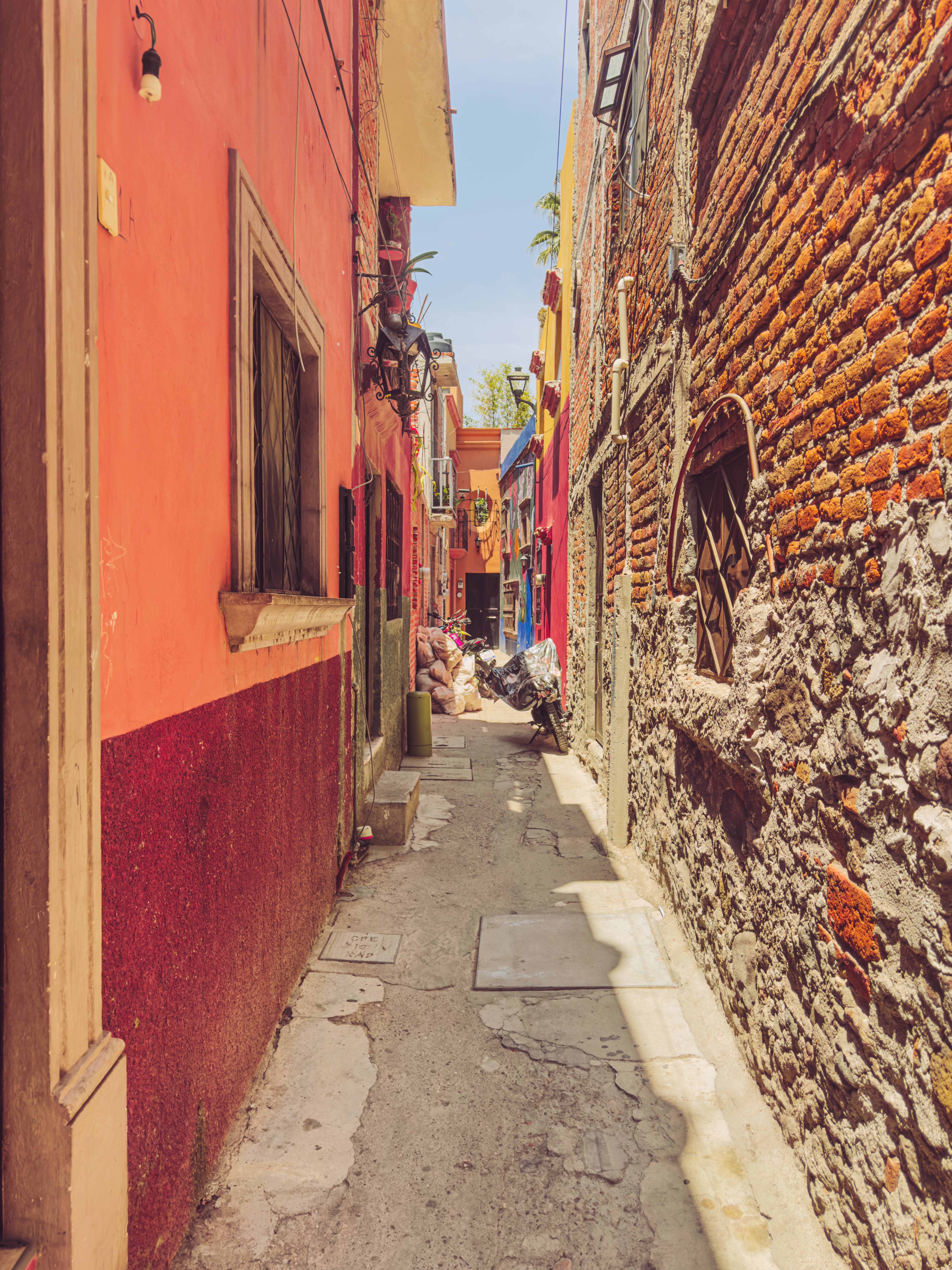
Outside of town, many a ‘road’ are more reminiscent of animal tracks. Some are ghost roads that seemingly only exist in the digital imagination of OpenStreetMap or Google or who-knows-where? — In this game, nobody is immune to the fantasies of city planners, farmers, and well-meaning mappers half a world away.
How I am mapping and tracking …
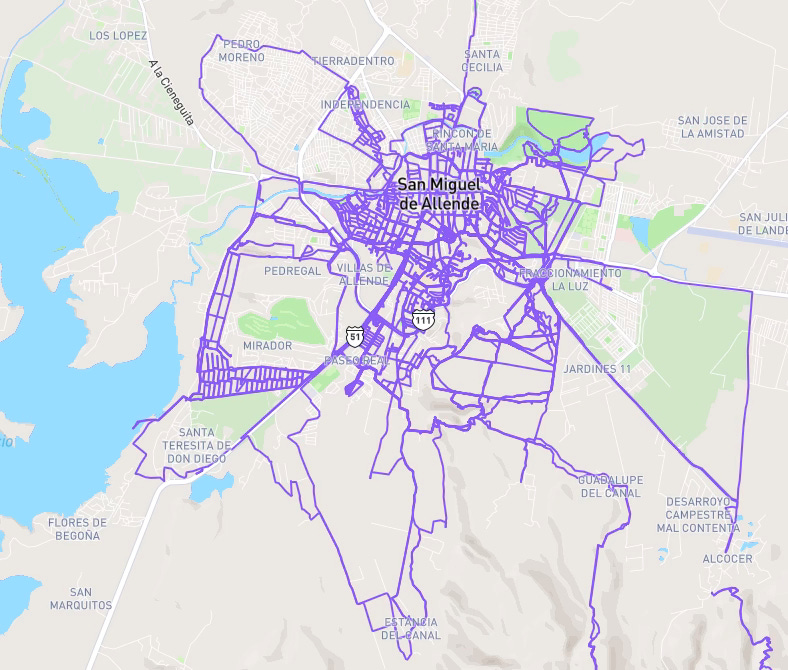
CityStrides, the platform I started this project with, and my initial source for tracking this sprawling project, relies entirely on OpenStreetMap data. This is brilliant in principle, and mostly fine in practice. The downside is that is only pulls on OSM data. And so when I have been following trails and tracks and roads that only reveal themselves when I encounter them, a dry arroyo, or a machete chopped path between neighborhoods, CityStrides doesn’t give me ‘credit’ for it. That is to say, it doens’t chip away at my completion percentage in my progress chart. Does that mean I only stick to OSM listed roads? Hell no. Where is the fun in that?
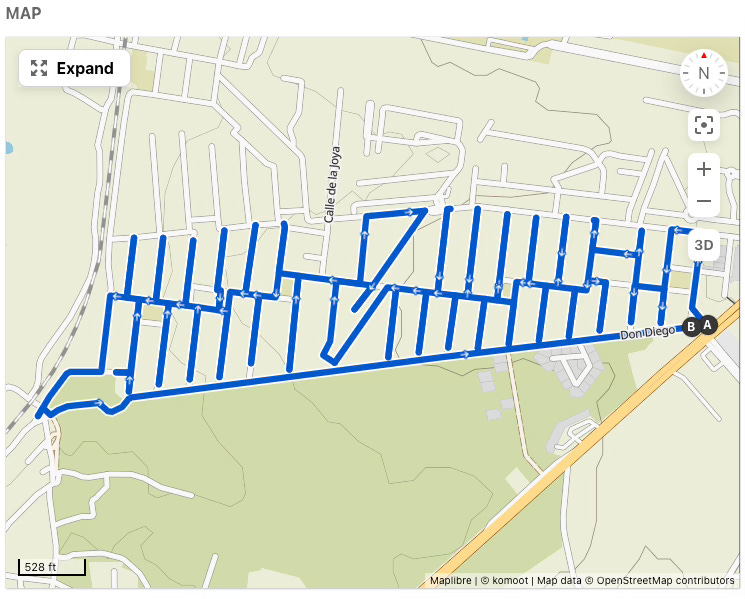
Komoot is the incredible app that I use to map each run and navigate real-time. I’ve been using it for almost a decade. It’s an excellent tool that has served me incredibly well in Europe and did a better-than-decent job in the US. Komoot in Mexico, can be more of a challenge, and it all comes down to the same reliance on Open Street Maps. The street data is relatively good, the only issue being an erroneously marked one-way or an open street that’s actually marked as closed. I’ve found the converse too, arriving at what is supposed to be an open road only to discover razor wire and fencing. Komoot’s trail data, is another story. In fact, it’s close to a horror story. The trail data falls off a cliff (not literally, at least not yet). There are entire networks of marked singletrack, purpose-built fire roads, centuries-old veredas between ranchos and villages, winding donkey paths, and foot worn routes through the chaparral and the cactus that are simply not there. Not hidden. Not there. If it weren’t for my curious nature, or the tip-off of a well-versed local, they would remain un-run. Satellite imagery proves useful to figure out the direction in which I should be running.
Strava Heat Maps are a somewhere-between-the-two combination that have proved very useful. For planning, the faint blue streaks on the satellite view are a shimmering ghost-trace of movement, like ley lines drawn by Lycra-clad pilgrims — but they skew toward tourists and wayward travellers because the locals really don’t seem to use Strava very much at all. For tracking, and more specifically live tracking that’s where the heat maps really come into their own. For example, if I’m running a route in a Colonia that I have already partially completed, and I arrive at a street that doesn’t feel familiar, but my Komoot is routing around it, a quick glance at my location on the Heat Maps shows me whether or not I’ve been there before. It’s proved extremely handy a multitude of times. Similarly, when planning an area that I’ve partially completed, I cross reference Heat Maps with Komoot as I plot each navigation point.


What about Google Maps I hear you ask? In terms of tracking or planning it’s pretty much useless. I have cross-referenced the satellite imagery on google and strata before because googles tends to be more current, but beyond that, useless. How I do use Google Maps is to save locations and POI’s when I’m out running. If there is a particular taco spot, or restaurant, or architecture or … whatever I find interesting, I save it to Google Maps so I can share it with other people, and have a record of places I want to go back to.
Additional mentions are worthy for Wikiloc and GaiaGPS – I have used both for trail running mapping, the latter more than the former. Wikiloc I have used as a way to verify the location of existing trails. It seems as though a few local-based hikers have populated their data in their. GaiaGPS I have used like a conventional map/GPS when out on unmapped trails. What is my location? Where am I going next? What’s the most efficient way to get there? The offline mapping plus the GPS is pretty clutch for that purpose.
So what do I do when all the maps aren’t quite right? I run. I follow my nose. I explore. I ask people on the street. I follow a burro. I let my curiosity become the compass. And, lately, I’ve started using ChatGPT to help me collate and interpret all of the data as one whole set. I figured out that I can cross-reference satellite data, overlay my GPX tracks, aggregate the information from my CityStrides account and visualize my progress to date. It will even help me identify the gaps. I’m thinking of ChatGPT as a cartographic assistant, because lord knows I need a helping hand.
Running every single street in San Miguel de Allende is so much more than a physical challenge. I am out here uncovering history, topography, colonial grids and indigenous desire lines. Plodding my way along dusty, unpaved rights-of-way that the data hasn’t seen fit to record.
And when people ask me how I know where to run, after a deep breath and a knowing smile, I say something along the lines of: “I’ll figure it out as I go.”